The fastest way to host multiple static sites under one account is to use a platform built for uploading, not building: drag each site's files in, give it a name, and get a live link. No server to configure, no separate accounts to manage, no build pipeline to babysit for every client project.
This matters more than it sounds. If you're a freelancer with eight client landing pages, or an agency spinning up a new prototype every week, the real cost isn't hosting one site. It's managing ten of them without losing track of logins, renewals, or which project lives where. Below is a ranked look at your options, starting with the simplest.
1. Droply: drag, name, done
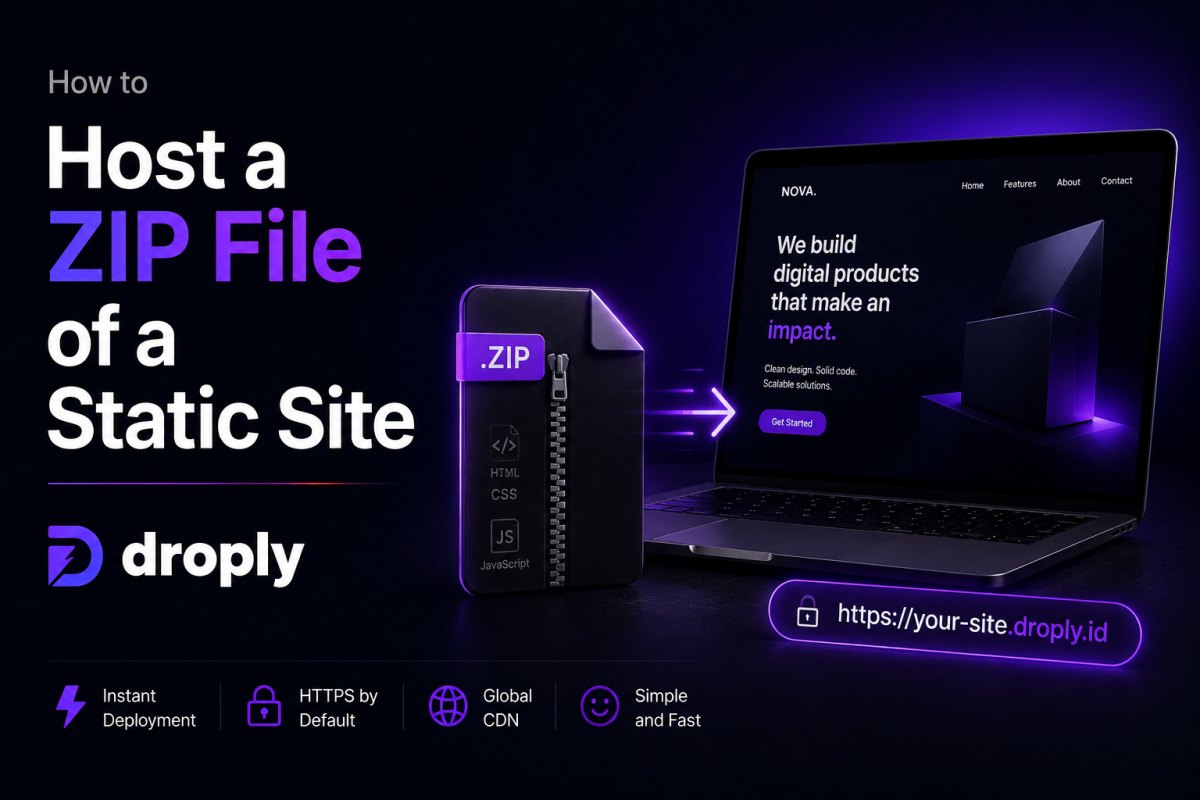
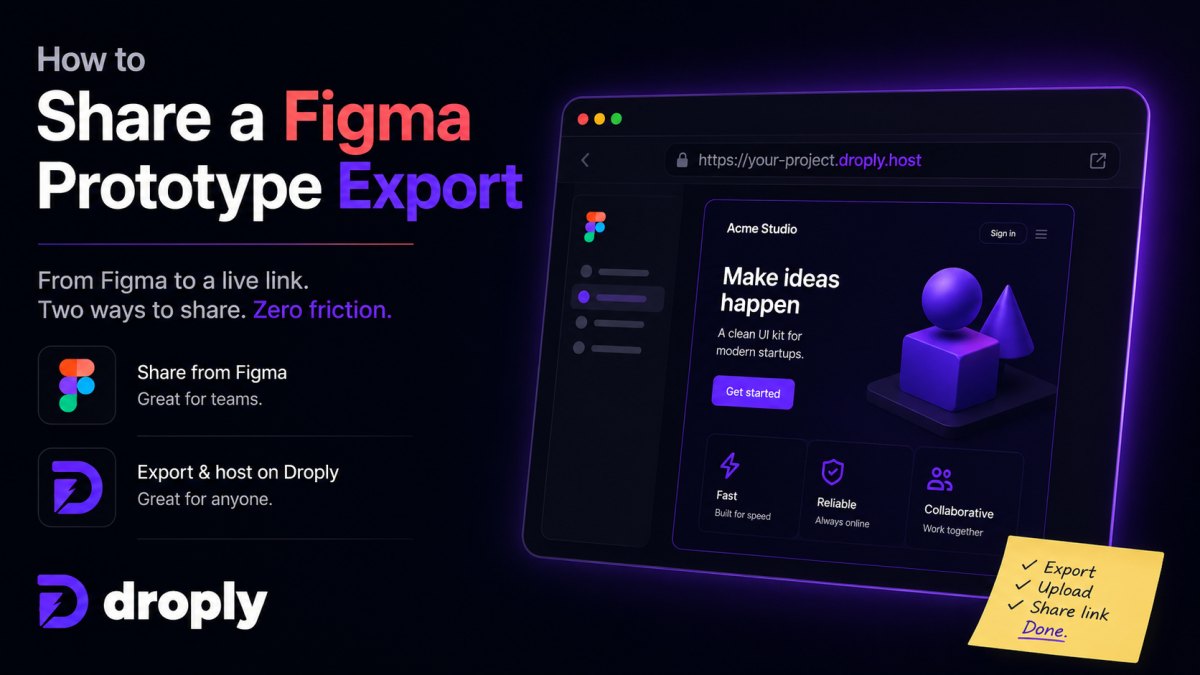
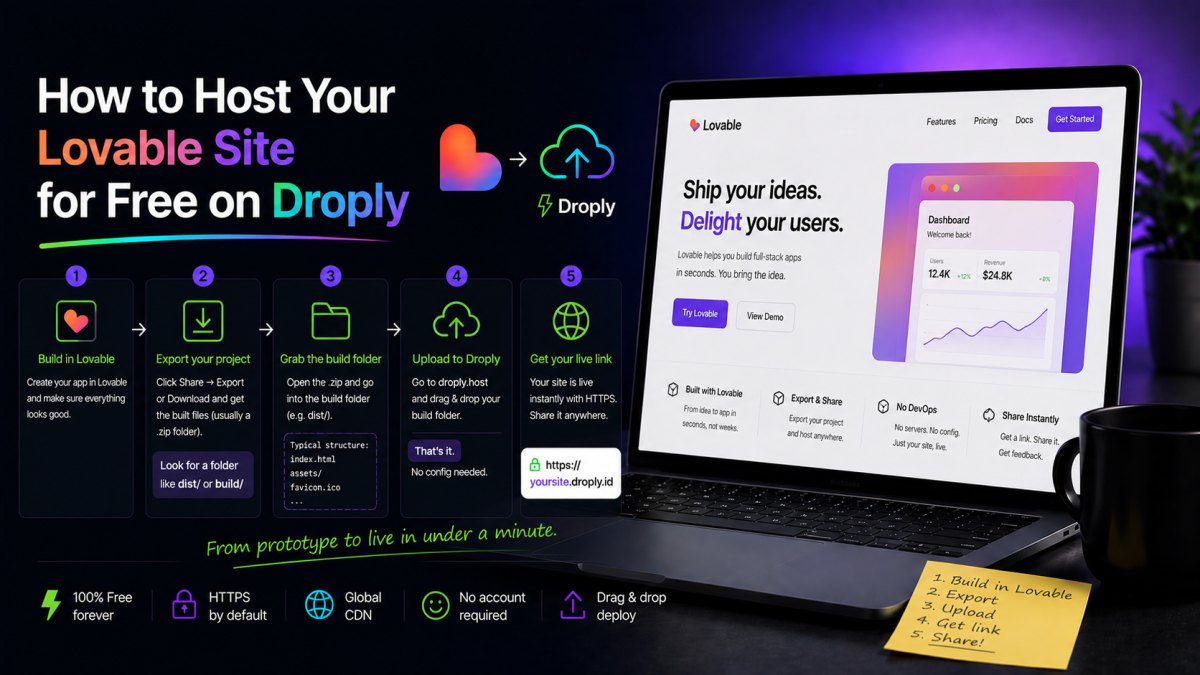
Droply (droply.host) is built specifically for this. One account holds every site you upload, and each one gets its own address at <name>.droply.id with no extra setup.
Here's the actual flow:
- Sign in to your Droply account.
- Drag your HTML file, a ZIP (a compressed folder holding your whole site) of a static site, or a PDF onto the upload area.
- Pick a name, like
client-acmeorportfolio-draft2. - Your site is live at
client-acme.droply.idin seconds.
Need to host a second site? Repeat the same three steps under the same login. There's no per-site signup, no separate dashboard to remember, and no server config to duplicate. Updating a site later is just as simple: re-upload the new file or ZIP, and the same URL updates in place, so any links you've already shared keep working.
This is the important limit to know: Droply hosts static output only (pre-built HTML, CSS, JS, images, PDFs). It doesn't run builds or execute server-side code. If your project is a plain static site, a design portfolio, a client landing page, a set of exported PDFs, or a static site generator's output (Hugo, Jekyll, Eleventy, or similar, built locally first), this is exactly the job Droply does well. If you need a live database or server-side logic, you'll want a different tool for that piece.
Paid plans add custom domains (so client-acme.droply.id can become www.clientdomain.com) and remove the "powered by Droply" banner, which agencies reselling sites to clients usually want. Check current plan details at /#pricing.
2. A traditional web host with subdomains or subfolders
Shared hosting providers (the kind that host WordPress sites) can technically hold multiple static sites too, usually via subdomains or subfolders in a single control panel. This works, but it was built for dynamic sites with databases, so you're carrying overhead you don't need: PHP settings, MySQL databases, security patches, all for files that are just HTML and CSS.
It's a reasonable choice if you're already paying for hosting and have unused space, but setting up a new subdomain usually means logging into a control panel, configuring DNS (the system that points a domain name to a server), and waiting for propagation. That's minutes to hours per site, not seconds.
3. A cloud storage bucket per site
Services like Amazon S3 or Google Cloud Storage can serve static files if you enable "static website hosting" on each bucket. It's cheap and reliable, but each site needs its own bucket, its own permissions setup, and often a content delivery network (a system that speeds up loading by serving files from servers near the visitor) layered on top for HTTPS. Multiply that setup by ten client sites and you've built yourself a part-time job.
This makes sense if you're a developer comfortable with cloud infrastructure and want fine-grained control. For most freelancers and agencies, it's more plumbing than the task calls for.
Quick comparison
| Option | Setup time per site | Non-developer friendly | Custom domain support |
|---|---|---|---|
| Droply | Seconds | Yes | Yes (paid plans) |
| Shared web host | Minutes to hours | Somewhat | Yes |
| Cloud storage bucket | 30+ minutes | No | Yes, manual setup |
4. Git-based deploy platforms
Tools like Netlify or Vercel are excellent if your workflow involves a code repository and a build step (compiling source files into a finished site). They handle multiple sites well and are a genuinely better fit if you're already committing code to GitHub and want automatic deploys on every push.
But if your "site" is just a folder your design tool exported, or a one-page HTML file a client sent you, setting up a git repository and a build pipeline is extra work with no payoff. That's the gap Droply fills: no repo, no build, just the finished files.
Do / Don't for managing multiple sites
Do:
- Use one account and a clear naming convention (
clientname-project) so sites stay easy to find. - Re-upload to the same name when a site updates, so shared links never break.
- Keep a simple spreadsheet or note of which name maps to which client, even with a tidy naming system.
Don't:
- Create a separate account or login for every client site. It's the fastest way to lose track of what's live.
- Mix draft and final versions under the same name without warning collaborators first.
- Assume you need a database or server just because a site "feels" complex. Most client sites and prototypes are static.
Which option should you actually use
If every site you're hosting is a finished set of files (exported from a design tool, a static site generator, or just plain HTML), Droply is the most direct path: one account, one simple upload flow, a live link in seconds, and no per-site setup to repeat. Save git-based deploy tools for projects with an active codebase and build step, and save cloud storage buckets for cases where you specifically need that level of infrastructure control.
For the freelancer or agency juggling five, ten, or twenty small static projects, the winning move is removing friction, not adding infrastructure.
Drag your file onto Droply and it's live in seconds.