

WEBSITE HOSTING FOR DESIGNERS
Website hosting for designers who want the work to open
Publish a portfolio, coded concept, case study or client preview as a real page. Send one HTTPS link, update the work behind it, and let people judge the thing itself instead of an attachment.
Free plan, free SSL, no credit card.
- 96
- file types for pages, images, documents and media
- 1
- site on the free plan, with no card
- 0
- Git steps when the design is already built
- 25
- publishes a day while the review is moving
How it works
Three steps, start to live link
-
Bring the finished artifact
Use the HTML file, built site folder, ZIP, PDF or image set you already made. If the page has separate styles and images, keep their relative folders together.
-
Choose the address once
Name the link for the project, client or campaign. The page opens over HTTPS in a normal browser, so it can go into a message, proposal, review ticket or portfolio profile.
-
Replace the work in place
Publish the next revision to the same site. The address already in the client thread keeps working, and paid plans can add a custom domain, password or rollback.
What designers actually send
What designers actually send
Website hosting for designers is a place to put finished visual work where a client, recruiter or collaborator can open it in the browser. The useful unit is not a hosting account. It is the portfolio, case study, prototype or review page that needs one dependable address.
A design handoff often starts in one tool and ends somewhere else. The source may live in Figma, the case study may be exported as HTML, and the client may only need a PDF. Hosting is the last step that makes those artifacts easy to open. A portfolio link can present the finished collection, while a client website preview lets a reviewer click the real build on their own screen.
That distinction matters for coded work. A screenshot proves how one frame looked on one machine. A hosted build proves whether the menu opens, the type loads, the layout fits a phone and the links go where they should. If all you have is raw markup, the HTML to URL flow can publish pasted code without making a file first. If assets sit beside the page, upload the folder or ZIP intact.
- Portfolio A selected body of work with enough context for a client, hiring manager or collaborator to understand your role.
- Case study A project narrative with the problem, the decisions, the result and the images that support it.
- Client preview The current HTML build at a stable review address, replaced as feedback turns into revisions.
- Coded concept A motion study, interaction idea or small interface that has to be clicked rather than described.
- Presentation or PDF A deck, proposal, style guide or design rationale that should open without a request-access screen.
- Asset collection Images, media and supporting pages kept together under one project address instead of scattered across a message.
Who it is for
Four design workflows, one last step
The file changes with the discipline. The handoff problem is the same: somebody outside your machine needs to see the current version.
-
Freelance designers
Turn selected work into a portfolio link that opens directly and can keep the same address after an edit.
-
Web designers
Put the built pages behind a client preview link so feedback is based on the real responsive result.
-
Product designers
Publish a coded interaction or use the HTML paste flow when an experiment exists as markup rather than a project.
-
Studios and agencies
Keep previews separate by client and update each one without changing the review link already in the project record.
In detail
What you actually get
A browser is the review surface
The reviewer sees the delivered page on the device they actually use. That reveals responsive behavior, font loading, motion and link states that a still image cannot carry.
- A single HTML file can be uploaded on its own, with no ZIP when it is self-contained.
- A built multi-page site keeps its relative CSS, image, font and script paths.
- PDFs and images open as first-class files when a website would add no value.
The review link survives revisions
Design work changes after it is shared. Each upload is a new deployment behind the same address, so the thread, ticket and calendar invite do not become a trail of obsolete links.
- Publish up to 25 times a day on the free plan.
- Rollback starts on Pro when a previous version needs to come back.
- The deploy-time security check runs on every version, including free ones.
Control the unfinished work
A preview can be shareable without being ready for search. Free sites are noindex, and paid controls cover the cases where an address should be limited to the people in the review.
- Password protection starts on Starter and covers the page plus its assets.
- Expiring links start on Starter for a review that should close on schedule.
- A custom domain starts on Pro, with the certificate handled for you.
Use the format the work already has
There is no reason to rebuild a PDF as a site or flatten an interactive page into a PDF. Choose the artifact that communicates the work and host that artifact directly.
- Use PDF to link for proposals, decks and style guides.
- Use ZIP hosting for a built site with asset folders.
- Use HTML hosting for a page you already exported.
A real example
Show the work, not a download link.
Designers & creatives
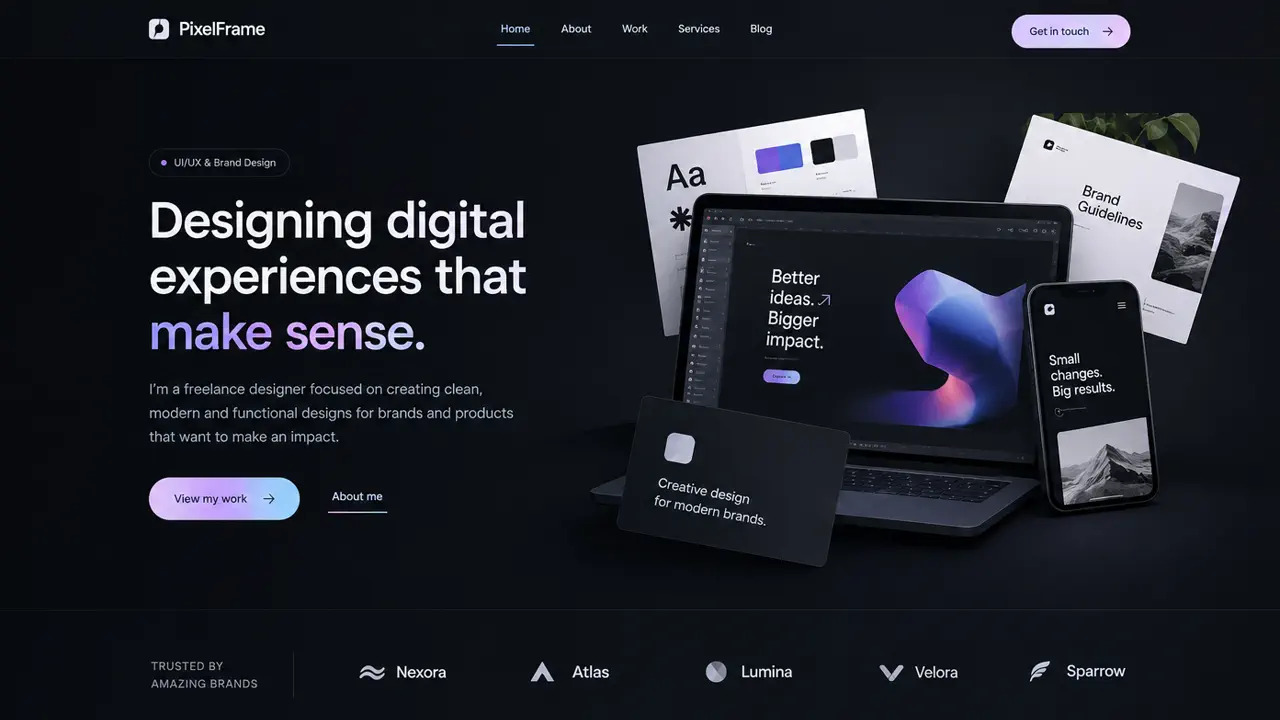
Send portfolios, case studies, and mockups that open instantly on any screen, with no attachment to download.
- Portfolio
- Case study
- Mockup
- Moodboard
No card required
What the free plan includes
The free plan is enough to put one current portfolio or review page online without entering a card.
- 1 live site on a real free plan, not a trial of a paid one, and no card to start.
- Up to 25 MB per upload and 25 MB of storage across the account.
- 5,000 visits and 5 GB of traffic a month.
- HTTPS with a real certificate, issued and renewed for you.
- Up to 25 publishes a day, so you can iterate without asking permission.
- The deploy-time security check, which reads what you published and warns about a stray .env file, a .git folder, a private key or an API key left in your JavaScript.
- A small Droply badge in the corner of the page. Removing it starts on Starter.
- Free sites are served noindex, so search engines do not list them. Search visibility starts on Starter.
- The same address after an update, so a reviewer does not need a replacement link.
A hosted result or a Figma share
Use each link for the job it is good at
Figma is the better place to inspect source design, leave comments and collaborate on frames. A hosted link is the better handoff when the deliverable is already HTML, a static site or a document and the reader should see that result without the editor around it.
| Droply | Shared Figma link | |
|---|---|---|
| What opens | The finished HTML, static site, PDF or image you published. | A Figma file or prototype, governed by that file's sharing permissions. |
| Comments and source inspection | No built-in design comments or layer inspection. | View access can include inspection and commenting, which is better for collaborative design review. |
| Prototype-only handoff | The hosted output is already the whole thing being shared. | Prototype-only links are documented as a paid-plan feature; Starter viewers can still open the source file from presentation view. |
| Password | Available from Starter, checked before any file is served. | Available on Figma paid plans for files and prototypes. |
| Link expiry | Available from Starter, with preset durations or a date. | Figma documents link expiration for Enterprise plans. |
| Best fit | A finished artifact that should look and behave like the deliverable. | Design collaboration, comments, permissions and prototype presentation. |
Figma rows checked 8 September 2026 against Figma's file and prototype sharing guide and its password protection guide. Product plans and sharing controls can change.
When Droply is the wrong choice
Use the design tool, client portal or development platform when the work still needs the capabilities of that tool. Hosting is the presentation and delivery layer, not a replacement for the place where the work is made.
- You need clients to comment on frames, inspect layers or branch the source design. Keep that review in Figma or the design system.
- You need a server-backed form, account area, product database or checkout. A static page can link to those services, but cannot provide them itself.
- You want the platform to turn a Figma file into production HTML automatically. Upload an export or a finished build; Droply does not generate code from a design file.
- You need a database, a login system, or code that runs on the server. Droply serves files; it does not execute your application.
- You want a build to run on every push to a repository. Droply has no Git integration and no CI: you build locally and upload the result.
- You are running WordPress or another PHP application. A static export of it can be hosted here, but the application itself cannot.